
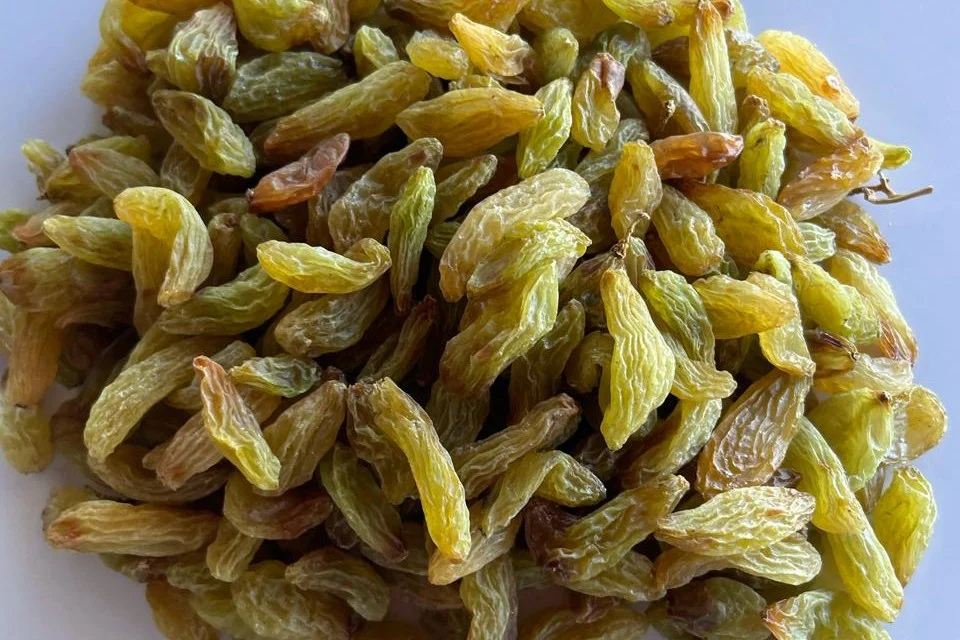
Indian raisins sell well abroad, and exporting them is a real opportunity for Indian traders and farmers. But a shipment only clears customs at the other end when the variety, quality, plant-health checks and paperwork are all in order. This guide covers why exporting raisins is worth it, the varieties buyers ask for, where Indian raisins go, the quality standards to meet and the documents you need.
1. Why export raisins?
- Better margins: buyers in Europe and the Middle East often pay more for high-quality, well-graded raisins than the domestic market does.
- Government support: registered exporters can use government schemes, export incentives and duty drawback.
- A stronger name: meeting global quality standards consistently builds buyer trust, cuts complaints and brings repeat orders, abroad and at home.
2. The Indian varieties exported most
Buyers abroad are specific about the type, colour and texture of the raisins they import. These are the varieties in most demand:
- Thompson Seedless: the main export variety. Light green to golden raisins, seedless, soft and naturally sweet.
- Sonaka and Tas-A-Ganesh: elongated selections of Thompson Seedless, known for drying well.
- Black raisins (Sharad Seedless): rich in flavour and in steady demand from bakery and confectionery makers.
- Manik Chaman: grown widely in Maharashtra; it gives premium golden raisins.
3. Where Indian raisins go
In 2025-26 (April 2025 to March 2026) India exported about 13,700 tonnes of raisins, worth USD 27.9 million (₹246 crore), to 94 countries. That was far below 2024-25, when India exported about 46,700 tonnes worth USD 72.1 million, so volumes can change a lot from one year to the next. The buyers are not only nearby countries: North Africa, South and South-East Asia, the Gulf and Eastern Europe all buy Indian raisins. The ten largest buyers in 2025-26, by value, were:
- Morocco: USD 4.6 million (17%)
- Sri Lanka: USD 4.5 million (16%)
- Vietnam: USD 3.0 million (11%)
- Indonesia: USD 2.0 million (7%)
- Malaysia: USD 1.9 million (7%)
- Saudi Arabia: USD 1.8 million (6%)
- Ukraine: USD 1.1 million (4%)
- Philippines: USD 0.9 million (3%)
- Poland: USD 0.8 million (3%)
- Bangladesh: USD 0.7 million (2%)
Together these ten took about three-quarters of India’s raisin exports. The order changes from year to year: in 2024-25 Saudi Arabia was second, and Romania, Russia and Iraq were in the top ten.
Source: APEDA Agri Exchange, India export statistics, HS code 08062010 (raisins), financial years April to March.
Each country has its own rules on pesticide residues, sulphur dioxide, labelling and certificates. Check the importing country’s requirements before you agree an order with your buyer.
4. Quality standards and compliance
Food buyers abroad do not accept contamination. Raisin exporters work to several layers of quality control:
- APEDA: traceability, proper packaging and strict control of pesticide residues. Keep full records from the farm through processing to the shipment, and use registered processing and packing units.
- FSSAI: hygiene during processing. Raisins must be free of dust, insects and foreign matter, and moisture must be controlled to stop mould. Labels must carry the batch number and packing date.
- Additive limits: permitted additives such as sulphur dioxide must stay within the importing country’s limits.
- HACCP and ISO certifications: a HACCP system finds the food safety risks in your process and sets control points for them, and large buyers often ask for it. ISO 22000, FSSC 22000 and GMP are recognised worldwide as proof of food safety.
5. The documents you need
Smooth customs clearance depends on correct paperwork. Before your first shipment, make sure you have the following.
Registrations (done once)
- Import Export Code (IEC): the permanent 10-digit number from DGFT that every exporter needs. It has to be updated once a year.
- APEDA registration (RCMC): the key registration for exporters of agricultural and processed food products, raisins included.
- FSSAI licence: shows that you follow Indian food safety rules.
- Business and tax papers: company registration, GST registration, an Authorised Dealer (AD) code registered with customs, and a Letter of Undertaking (LUT) to export without paying IGST.
Documents for each shipment
- Commercial invoice: the main bill, with the HS code (raisins fall under 0806 20), buyer and seller details, Incoterms and the currency of the sale.
- Packing list: what is in each package, matching the invoice, with gross and net weights and dimensions.
- Shipping bill: filed with customs for export clearance; it is also the basis for claiming export incentives and duty drawback.
- Phytosanitary certificate: issued by the plant protection authorities after inspection; it confirms the shipment is free of pests and meets the importing country’s rules.
- Certificate of origin: states where the raisins were grown or processed; it decides the import duty your buyer pays and whether a trade-agreement rate applies.
- Bill of lading or air waybill: the carrier’s receipt for the goods, proof of shipment and the contract of carriage.
- Inspection and quality certificate: a pre-shipment check by an authorised body that the goods meet the agreed quality, when the buyer or the importing country asks for one.
- Fumigation certificate: often asked for agricultural goods and for wooden packaging, to show an approved pest treatment was done.
Ready to export your raisins?
Buyers abroad want good Indian raisins. The right variety, steady quality and correct paperwork are what turn an order into a smooth shipment.
If you already have a buyer, Moggies Export Services can help with the registrations, the shipment documents and customs clearance, and the certificates, inspection and quality checks. The first call is free; after it you get a plan for your product and market, and a quote for that plan.